Thursday, March 31, 2016

Wisdom's City

So while you were climbing around the Pyramids of Egypt, suddenly you realize that you are extremely close to the Mediterranean Sea (thank you middle school geography). You know what's on the other side? OK, there are a lot of countries over in Europe, but the place that's really close. Just north of you...

Greece

Athens, Greece

Specifically Athens, Greece is where we will be going. Now what use to be an easy journey by sea, has become rather difficult. Occasionally there is a ferry that travels between the two countries and there are freighters, but the average traveler is not going to want to book a freighter. Who said we were average tourists though?

Regardless there are ways to go between the two. One route I found hops to Cyprus, then to Rhodes, Greece, and then to Piraeus (which so happens to be right outside of our predetermined destination... Athens! If you actually take this route at any time in your life check with the cruises that operate these routes. You can't reserve seats if you're going one way so you need to make sure there are seats available. It's a little bit of a hassle, but you could check out Cyprus too, which is its own adventure.

Once in Athens the fun can begin. I've always been interested in Greek Mythology and when you're in Athens, you're in the heart of it all. The totem of ancient Greece, the Olive tree finds its origins in the city of Athens. The reason the city itself is called Athens is after the Greek goddess Athena. The short story is that Athena gave the city a better gift than Poseidon, the Olive tree, so she became the god to be enshrined in the city. As the city's protector, many temples were dedicated to Athena. Probably the most famous one was the Parthenon of the Acropolis.

An Olive Tree
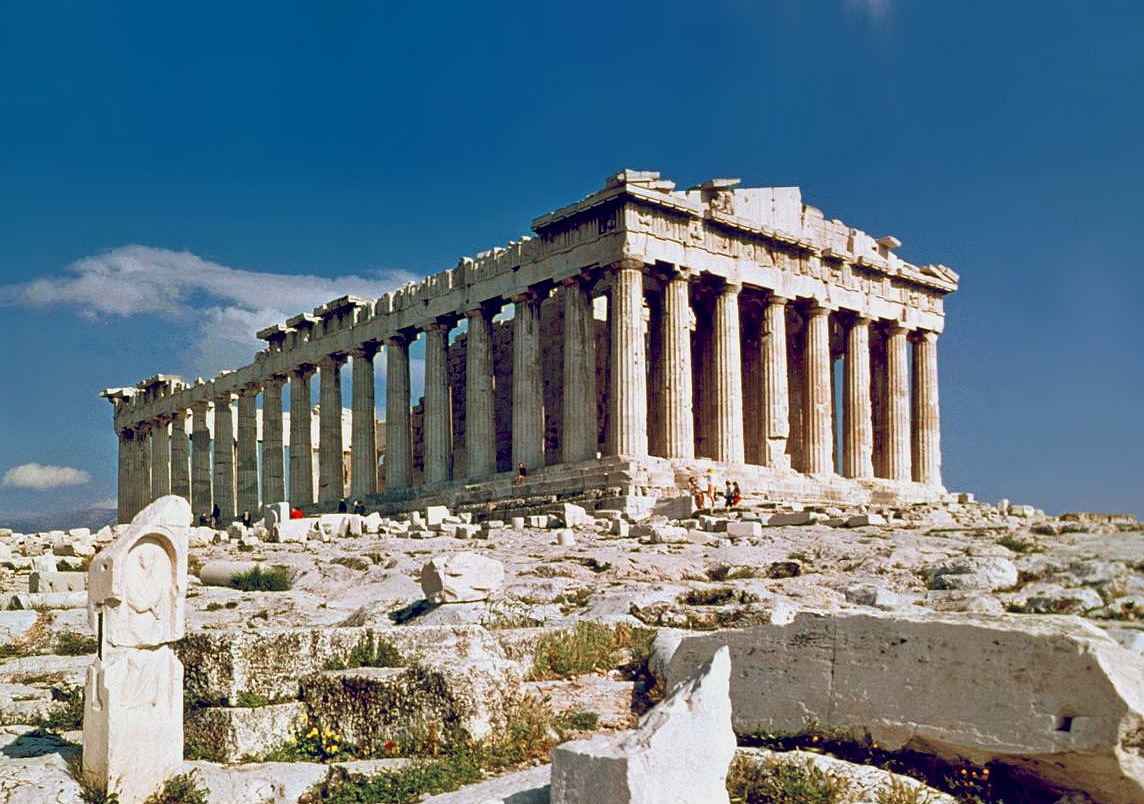
Built during the Golden Era of Athens, the Parthenon was erected by the Pericles administration and the architects Iktinos and Kalikrates. Its original columns and marble construction would prove to be some of the most influential architecture in history. All you have to do is go to a library or some government building here in the United States to see that. One cool little detail about the building itself is that the external pillars aren't actually straight, they were built a little curved. With the Attica landscape, this made it so no matter what angle you look from the pillars look straight!

The Parthenon
These are some of the remains of the statues of important
mythological individuals that were located in the Parthenon

Sadly in 1687 the Venetian army blew the building to pieces. When the bomb went off the only wall left standing was to the East and countless artifacts were destroyed. As time moved forward no one made an attempt to collect the untimely rubble so pieces have disappeared as tourists throughout time have taken a souvenir for themselves. Now the most important pieces reside in the Acropolis Museum. This exhibit was finalized in 2011 and sits 300 meters from the ruined temple.

Possibly the most important statue of the Parthenon,
the statue dedicated to the goddess of wisdom,
Athena.
This place in itself holds a history of mythology, architecture, and even battles. I think it would be undoubtedly worth going and seeing/exploring. Pericles had the right idea when he said, "...we shall be the marvel of the present day and of ages yet to come."

Thursday, March 24, 2016

203 Steps to the Top

I've realized that as I'm finding places I want to visit I've avoided some very important popular places! The Seven Wonders of the Ancient World must not be overlooked so I will now explore a country that includes one of those wonders.

courtesy of flicker
Egypt

Destination one when you are in Egypt has to be the pyramids of Giza. Although they may not be the most exciting place for some, they are the Wonder that comes from Egypt and they can easily contend with the most recognizable piece of the world. Known as some of the "most magnificent man-made structures in history," the sheer massiveness of these pyramids bring awe to tourists everywhere. The pyramids were built in the beginning of the Old Egyptian Kingdom, and they ended around the sixth dynasty (roughly 2325 BC). The oldest known pyramid is known as Step Pyramid and was built at Saqqara in 2630 BC. Giza is the oldest of the three pyramids of Giza and is the most celebrated pyramid (it's also where the title of this blog comes from). This pyramid is the only surviving structure out of the seven ancient wonders!

 
Step Pyramid
Pyramid of Giza
Going back a few sentences, I want to point out something. Cool thing about Saqqara... you can go inside a the pyramids here!...

I'll just let that soak in...

Who wouldn't want to!

Unless you're claustrophobic of course, then I wouldn't recommend it.

Inside Saqqara --  the Djoser Pyramid
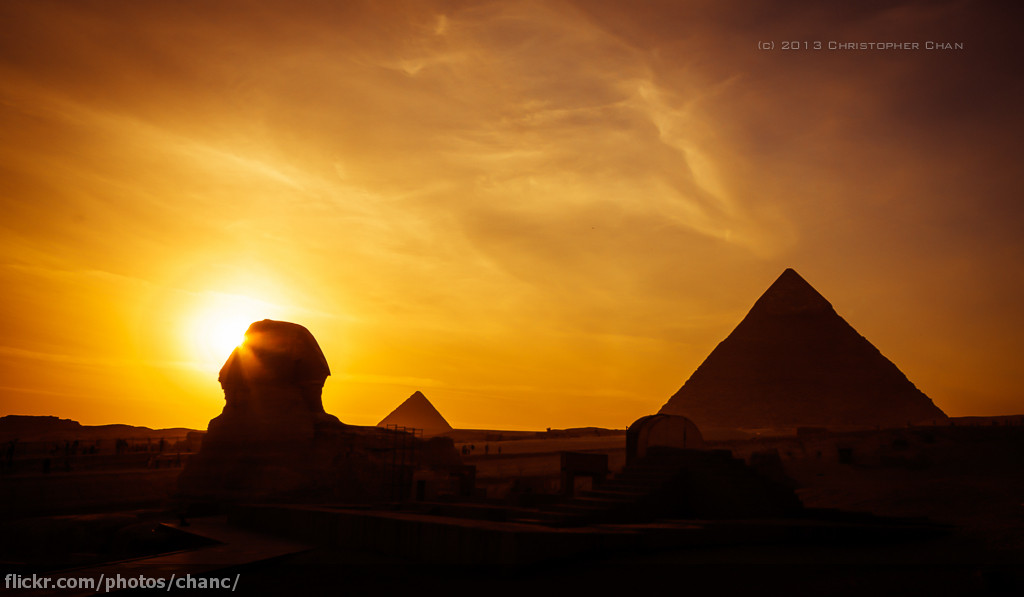
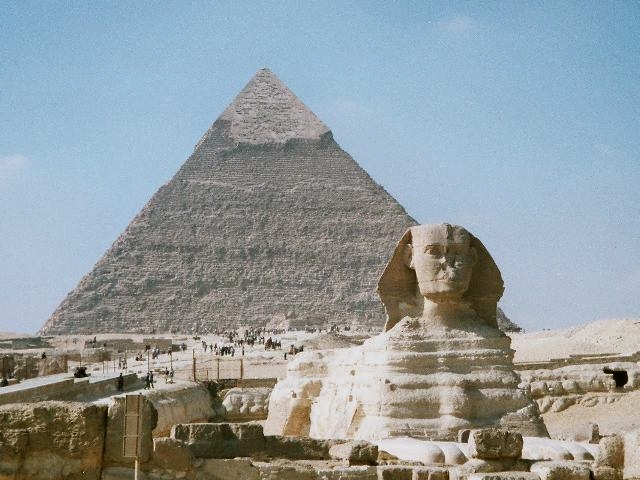
The next big thing about Egypt is the Great Sphinx. With the head of a human and a lion's body the statue is "the first truly colossal royal sculpture in Egypt." Next to the pyramids its a national symbol of Egypt, no matter what time period you're talking about. Located south of Khafre's pyramid at Giza one cannot forget the fact that this monumental statue is also connected to a temple! Honestly there's no losing here because as long as you make it to Giza you're guaranteed to see at least two of the most known worldly structures.

The Great Sphinx


Although there are plenty of other places you can explore in Egypt, from Cairo, the Egyptian Museums, and Luxor, to the Nile (of course), and their gods' temples, the two next places are the final two I will recommend for Egypt. The Valley of the Kings is a royal burial ground for a large amount of Egyptian pharaohs, queens, priests, and other elites. I can only imagine the atmosphere around the place, mystic and other worldly. After being on a college campus for a while I feel like the change in just the atmosphere would be its own adventure. The other place is known as Karnak Temple. Being the largest religious building ever made, the place spells playground! You could very easily wonder through the 200 acres of land exploring the Hypostyle hall or the statue of the god Amun and not see another tourist for hours at a time!


Valley of the Kings
Karnak Temple

Like I said... playground.

Egypt itself is like a giant amusement park of history and exploration!

Thursday, March 17, 2016

Stars in the Lake


Have you ever been to the arboretum at night? It's stunning how many more stars you can see in the sky on a clear night when you're out there compared to when you're on your way back from either a late class or practice. Can it get any better!?

Lake Titicaca

Resting on the border between Peru and Bolivia, this lake holds some amazing secrets. With an area of 58,000 square kilometers and an altitude of 3,812 m it stands as the highest navigable lake in the world (which basically means that a vessel can pass through it). There are two popular spots to see while you are visiting the lake: Puno and the Isla del Sol. 

courtesy of wikipedia

Puno is the capital of the Puno Region of Southeastern Peru and is located on the western edge of Lake Titicaca. The city has been nicknamed the "Capital folklorica del Peru" due to its location near the Lake. Why? It is said that Lake Titicaca is the birth place of the Inca civilization. According to mythology, the sun god Viraccha had the first Inca king, Manco Capac, rise out of the Lake's waters and start the civilization. 

The city remains cold and dry year round due to its high altitude so dress warm, but be careful because the sun will get you! During July/August one tourist is hospitalized with a sunburn almost everyday. On top of that make sure you take time to get use to the altitude (because altitude sickness sucks...)
courtesy of wikipedia

The Island of the Sun, is located on the other side of the Lake within Bolivia's borders. Being the most sacred of any Inca site it is the specific location of the beginnings of the Inca Empire. The lake actually takes its name from the ancient Aymara language's name for the island, Titi'kaka, which means "the puma rock." From the island you can experience the civilization in an unforgettable way. You get to stand in the ancient relics, feel the unique atmosphere, and even view the beautiful Andes!

With over 180 ancient relics the island is definitely worth going to (but be warned, there are no formal roads, if any at all). Keep in mind, if you do go to the island, the only way to get there is by boat and typically you'll want a guide to go with you! One of the greatest things about the island is the way of life on the island. Although some may be unappreciative, there is no noise, no motorized vehicles, and the living space is very clean making the island probably one of the most tranquil places you may ever visit.

courtesy of pinterest

To finish off, one of the best experiences you'll get while you're at the lake is looking at the sky. The region lacks so much light pollution that you can actually see the Milky Way on a clear night!

Between the sights and history found within the lake itself, the trip is definitely worth it.


Tuesday, March 1, 2016

Marathon on A Mountain

Can you imagine a marathon on a mountain? I can't.

But I've also run one...

How does that work?

Mount Marathon

Thanks to my Mom for getting the pictures to me

An iconic annual race officially began on July 4, 1915. Known as Mount Marathon, the race is held in Seward, AK and is a popular event that touches the people around the world! The race is held annually on July fourth, but it isn't easy to get a slot in. Racing is sought after by everyone who makes their way to the scene, from places like Colorado, Canada, Australia, and even a number of European countries! Slots are either earned by winning other races that are declared eligible races, or won through lottery or raffle. If you're lucky you'll get a spot through raffle, but the truly dedicated pay thousands to race! The only upside is that once you race once you are guaranteed a slot to race in the next consecutive year. But don't miss a year or else the slot will be forfeited to the next racer!

The race itself consists of a mile and a half up and another mile and a half down! I know... it's not really a marathon, but its up a mountain so it makes up for it (not really). The mountain isn't your normal mountain though. The popular route takes you through a section with heavy foliage first. Honestly, it was like rock climbing and tree climbing had a baby. Then you would bust through the forest's limits and race up loose shale until you reached the turnaround point. For the 17 and younger race the turnaround was about two thirds of the way up the whole mountain. Adults trek the whole ordeal. The fastest standing time for the whole race stands at 41:48 by Kilian Jornet Burgada from 2015.


The way down, which is also the other way up, consists of falling rocks, a lot of "Heads Up!" and a waterfall! If you choose to you may brave the waterfall, but be warned, extensive and life threatening injuries have been realized within that short 30 second stretch of danger. The safer way down is through a series of switchbacks in the trees. You are informed of the dangers before each race as the gruesome pictures of broken legs and people being removed from the race by stretcher due to nasty falls (normally down the waterfall...).Regardless, everyone races, whether because we're crazy, don't care, or don't scare easy, I don't know.


Beyond the race, Seward is filled with life during the week of the fourth. People from all over the world come to celebrate the holiday, event, and the outdoors in general. Most people camp or stay in cabins during the week, and it is an experience not easily forgotten. With all the opportunities that come with the week it makes my top ten list of places to go on random vacations if you ever feel the need to get away, specifically on the fourth!